
Proof is missing at the decision point
Reviews, photos, credentials, or real work proof may exist, but they are not close enough to the moment where a visitor decides whether to continue.
Conversion leak audits
I review your public website, Google or social proof, and booking path from a phone-first customer view, then show the smallest fixes that can make calls, bookings, or quote requests easier.
No fake guarantees. No giant report. Just the trust, path, and fit issues a real customer notices before they contact you.
They lose buyers because the next step feels uncertain. The audit looks for the moment where a real visitor has enough interest to act, then hesitates because trust, service fit, or the contact path is not clear enough.
Reviews, photos, credentials, or real work proof may exist, but they are not close enough to the moment where a visitor decides whether to continue.
The call, booking, quote, consultation, or order path is hidden, delayed, too long, or not obvious on a phone.
Services, packages, service area, price range, process, or timing are unclear enough that a ready buyer keeps comparing.
A website can look finished and still leak inquiries. The useful question is what happens from discovery to decision: Google profile or social proof, first screen, service fit, CTA, response expectation, and whether the business can learn from calls or forms.
For local services, I also check whether the public profile promise continues on the website: service area, services, reviews, photos, and the booking or quote path should feel like one customer journey.
A customer may start on Google, Maps, Instagram, or a booking profile. The audit checks whether that profile-to-site handoff keeps the same promise or makes the customer restart their decision from zero.
Reviews, photos, services, location, and booking links create a promise before the website ever loads.
The first screen should continue the same service, area, proof, and trust cues without making the visitor hunt.
Calling, booking, requesting a quote, ordering, or scheduling a consult should feel like the next obvious step.
These are illustrative examples, not client claims. The point is to show the diagnostic method before asking a business to trust a redesign.
A detailer has good photos and reviews, but the first screen does not explain package differences or make booking and calling easy enough.
The work looks sharp on social, but a new client is pushed into booking before they understand service, provider fit, price, or duration.
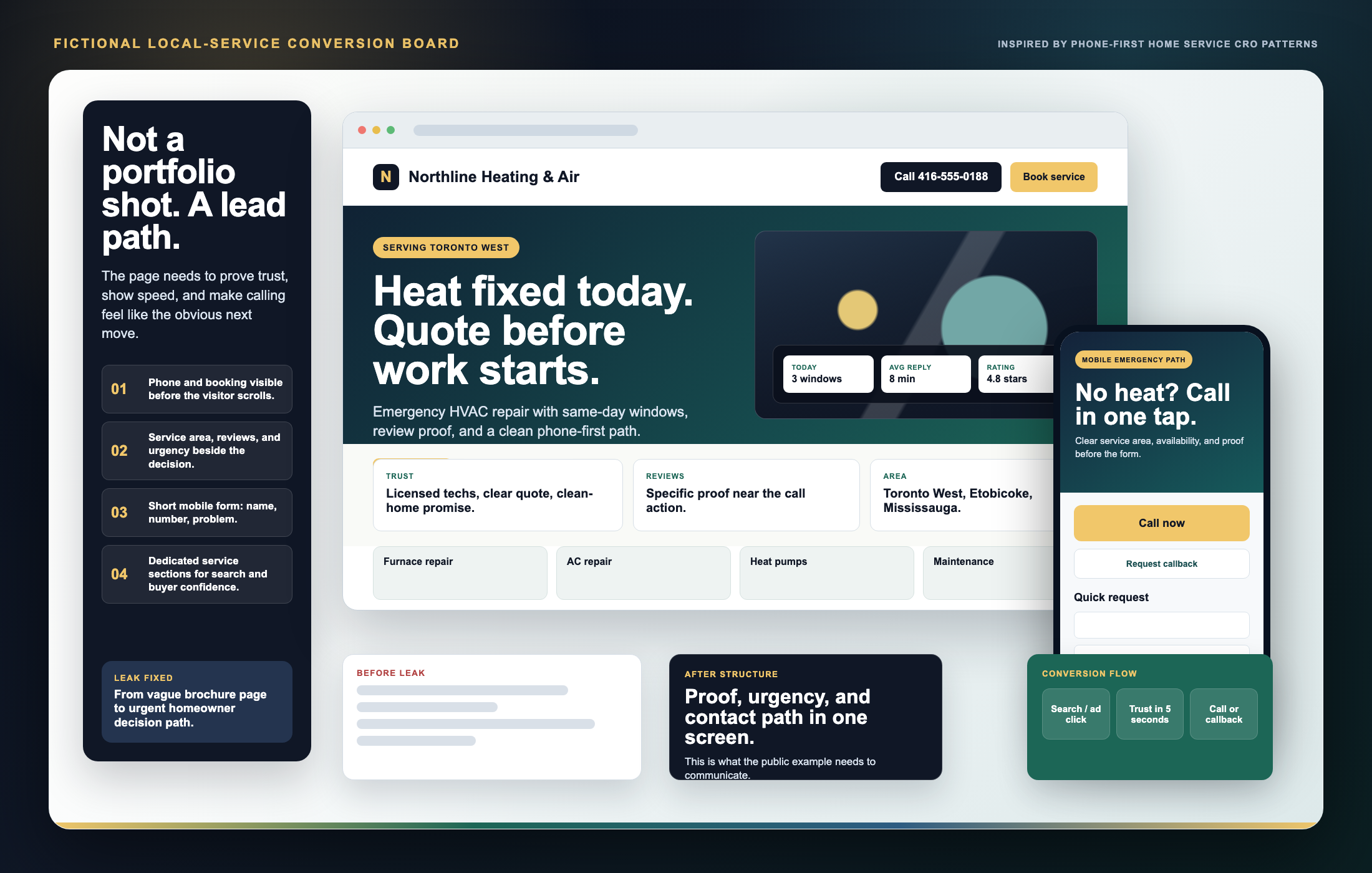
The company may be capable, but a phone-first homeowner cannot quickly see service area, proof, and quote or call action together.
The firm looks legitimate, but a new client cannot tell whether the firm fits their situation or what happens after they reach out.
A good audit should not turn every page into a giant rebuild. The first recommendation is the focused repair most likely to make the customer path clearer.
I identify the main trust, path, and fit leaks from public evidence.
Repair the first screen, booking path, service menu, or quote/contact path.
Build one complete page around a high-value service with proof and clear inquiry flow.
Refresh proof, offers, seasonal details, service pages, and small improvements over time.
I do not invent reviews, promise guaranteed revenue, or pretend design alone fixes a weak offer. The goal is to make the business easier to understand, trust, and contact.
Send the business name, current website or profile link, city or service area, and the action that matters most: call, booking, quote, consultation, or order.